


Sherwood 4 Kids Sake pivots to food distribution
The nonprofit used to collect school supplies and necessities; now it fills gaps at local food banks
SHERWOOD, Ore. — Food insecurity is on the rise all over, but one Sherwood organization is taking extra care to coordinate the collection and distribution of food donations for local children and teens from low-income families.
Local nonprofit Sherwood 4 Kids Sake has been providing food, school supplies, essential services, clothing, shoes, bedding, and emergency essentials to local families in need for more than 15 years. Its mission is to meet the urgent needs of local youth from low-income families with the goal of delivering at least $5,000 worth of nourishing food every week.
Meredith Green is the president of Sherwood 4 Kids Sake. She also owns Tualatin Valley Tax Service.
“If the kids are hungry, they can't study and they're not going to focus,” Green said. “Our entire mission is to get them to graduate and be successful moving forward. But if you're at the very basics, hungry, that's not going to happen.”
The nonprofit has access to local wholesale distributors, and can secure bulk pricing on perishables like produce, dairy, and proteins with monetary donations. It also collects shelf-stable food donations. Then, it distributes the donations to local food banks, where families can easily pick up what they need without worrying about finding another location.
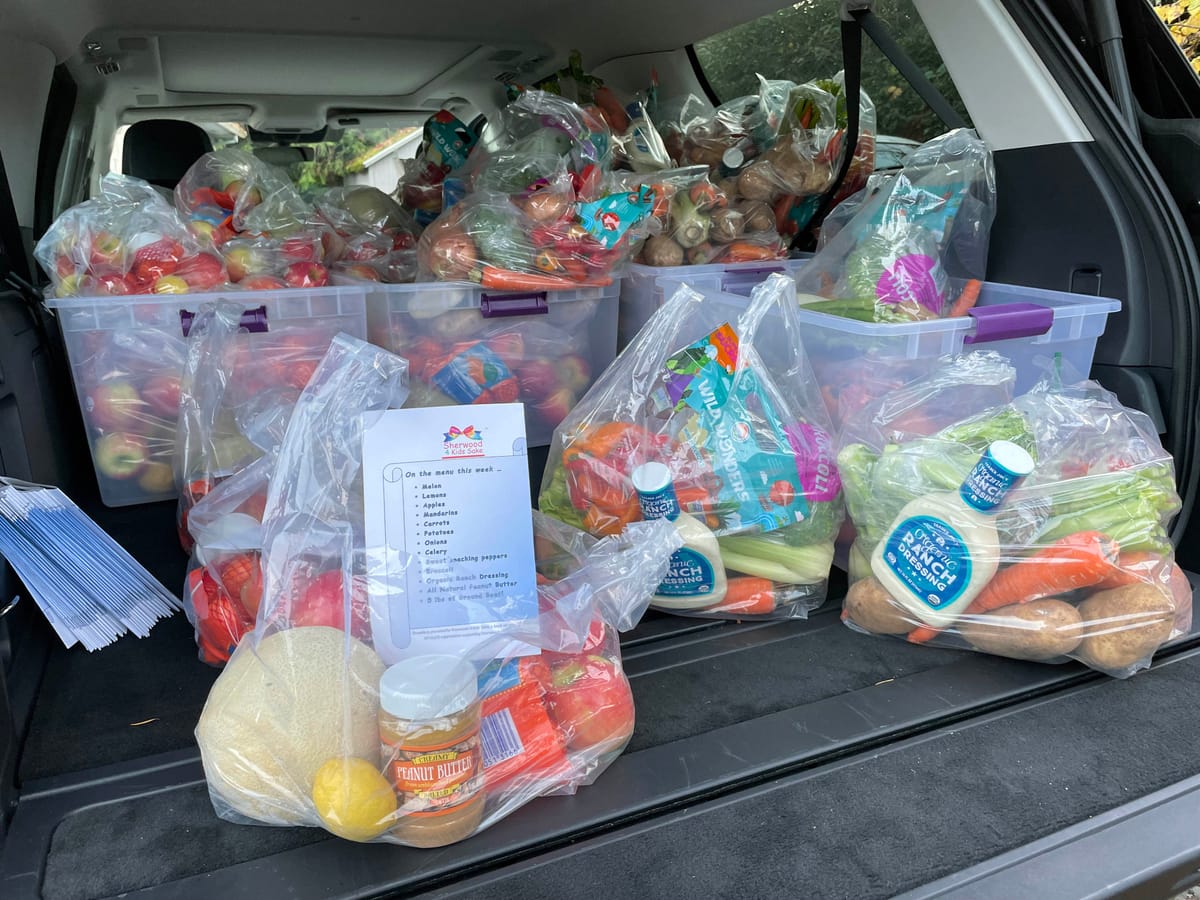
“We are really good at logistics; we’re really good at pulling everything together from our years of packing and putting things together, making them look nice, and making people feel valued when they receive them,” Green said. “We're going out acquiring the food, purchasing everything, and then putting it all together in really nice packages. We’re buying as much as we can; we’re buying brand-name things, things that people actually want … and then we’re taking it to the food banks for them to distribute to families.”
The nonprofit brings donations to the food banks and directly distributes it on location, or sets it all up so that the food bank only has to hand it out.
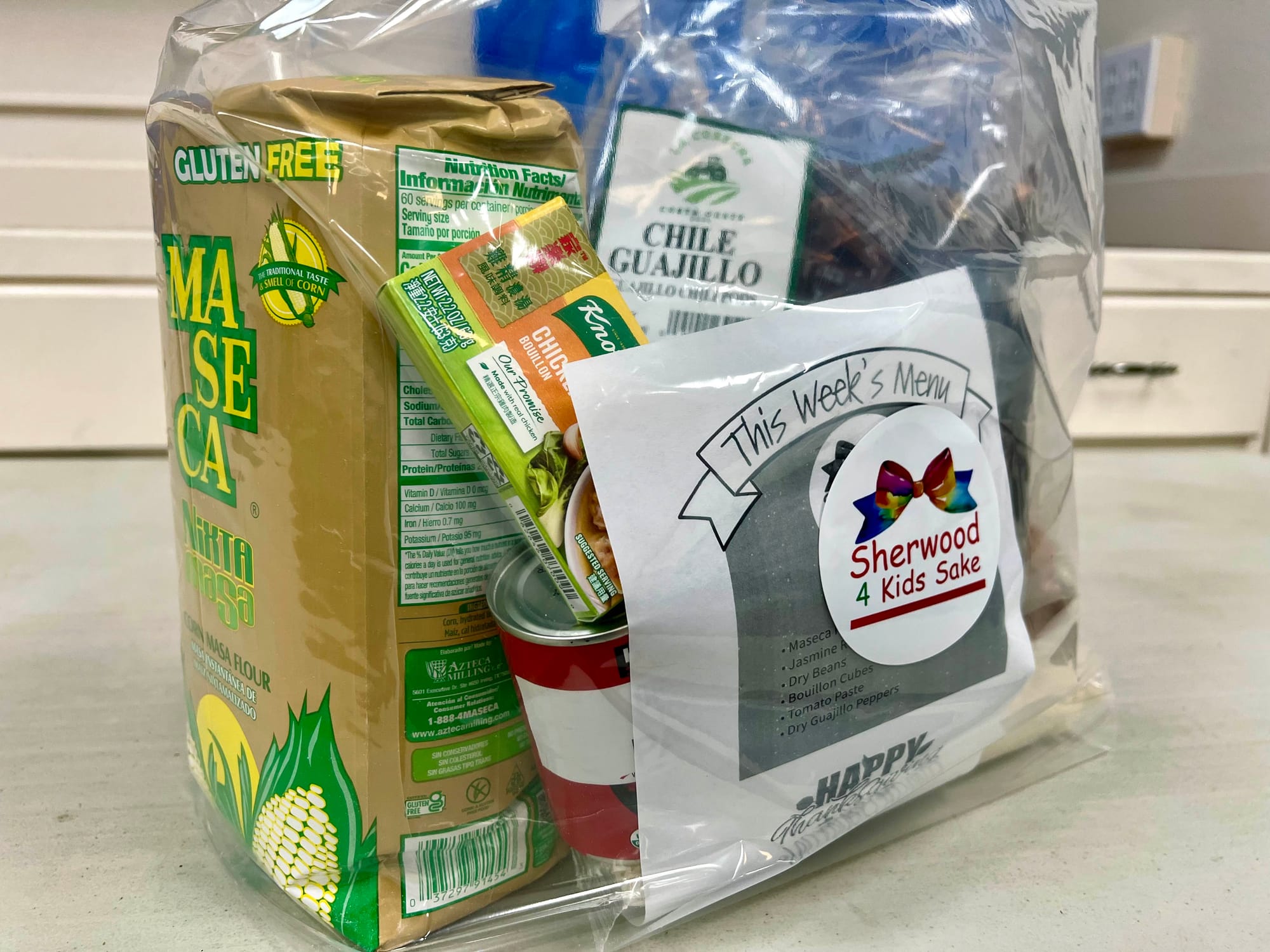
On the week of Thanksgiving, the nonprofit created cultural food banks with Hispanic, Vietnamese, and multicultural Asian cuisine bags along with traditional American Thanksgiving foods.
“Interestingly, those were the first bags to go,” Green said. “The feedback we got was, ‘oh my gosh, we can make tamales, we can make the things that we want to make that's not necessarily traditional American stuff.’ So that went over really, really well.”
In two weeks in November, Green said the nonprofit distributed more than 10,000 pounds of food. On Thanksgiving week, Green said the nonprofit helped almost 200 local families receive free food — and every single thing they collected was distributed to families in need.
“We packed it on a Tuesday and everything, by the end of Saturday, was actually in the hands of people — and I think that is what's different about what we're doing versus donating to food banks,” Green said. “I'm by far not discouraging people to donate to food banks, but we are immediately taking the money and buying food for that week and distributing it and making sure it's not sitting on a shelf, it's actually going out.”
Targeting the need
The nonprofit no longer accepts donations of hygiene items or toys, after a disastrous attempt in years past where they received half-used deodorants or Barbie dolls when families need food.
“The last time we did our (gift) distribution in 2023 we had over 200 Barbie sets — and we had like 25 girls asking for Barbie — so there was this real (disconnect between) what people want to do and what they have in their mind of who they're serving, versus what the actual needs are in the population,” Green said. “We literally could not get them to give us a pair of Nikes, even if they would buy Nikes for their kids, and so we were having to basically solicit funds and go buy everything — and then we would get all these donations of toys and stuff that's not what the families needed, and it became a burden on them, because they don't have room for all that.”
The nonprofit pivoted to its new strategy in 2023, of filling the gaps and distributing needed food to local food banks instead, partially because there were already other toy donation programs going on in town, like Toys for Tots.
“The best way to support us is to donate cash, because we are able to go out and buy in bulk,” Green said. “That first week, each family got 27 pounds of food — which included five pounds of (restaurant-quality) ground beef — and it only cost us $46.12 a family, so there's no way that anybody can go to the grocery store and buy what we're doing.”
Food insecurity rises in Sherwood
Green said 10% of the families who picked up Thanksgiving bags said they have never gone to a food bank before.
“With everything going on with the government shutdown, with the SNAP benefits (being cut), there’s a lot more to it,” Green said. “These are soccer moms, these are people who own houses in Sherwood, their kids are going to school — they’re probably not on free or reduced lunch, but somebody has lost their job because of everything that’s going on and all the uncertainty.”
She said reduced food assistance is not the only reason more people are experiencing food insecurity this season.
“The numbers are up because there's so many people that are just on the borderline of being vulnerable,” Green said. “The housing prices in Sherwood are so high, most families have to have two incomes to make it — and if one of them has lost their job, that's a whole lot of people that are going to be right on the edge, and (people) don't think about that in an (affluent) community like this.”
Green said food banks encourage families to pay their mortgage first, and then come get the food from them.
“If you can eliminate one of your bills, do that, so that you don't completely disrupt your whole entire life — pay your rent,” Green said. “Come get food from the food banks — they want you to use them so that you can try to stabilize your household.”
Where to donate
Community members can drop off donations at OnPoint Community Credit Union, Fat Milo’s, and Mason Vecchio Ristorante Mondo. The nonprofit also hosts weekly food drives with themes that help the food banks bridge the gaps, such as breakfast bags, high-quality fresh produce, or pantry staples like spices, flour, oil, sugar, salt, and pepper.
“We want to make sure that we're being extremely frugal with our resources and not duplicating, so if they (the food banks) are not going to get apples, then we'll get apples,” Green said. “Unfortunately, they don’t get very much lead time … for example, they got back to me and said hey, can you fill the gap? Can you get the rest of the eggs so we can actually do eggs for every family?”
In this way, the nonprofit helps the food banks put together things like breakfast burrito kits for every family.
“We're going to do some frozen Eggo waffles, things that are easy for the kids, shelf stable, milk, juice, you know, a whole bunch of things,” Green said. “We're also trying to focus on nourishing foods. A lot of times what the food banks get are extremely chemically processed foods, and they're not healthy, and a lot of the families, they're just like everybody, they don't want to feed their kids that.”
Green said if she wouldn't feed it to her own kids, she doesn't put it into 4 Kids Sake, instead offering all-natural peanut butter with no preservatives and organic ranch dip.
"We're not trying to pass judgment on people if that's what they like, but also our families don't get those options, so we're trying to at least make sure that what we are distributing has a health (benefit)," Green said.
She said the nonprofit intends to operate through the holidays and into the first half of January before taking a break to reassess a sustainable strategy.
“The very best thing that (the community) can do is donate money. The second best thing is to donate to one of the drives,” Green said. “ I really want everybody to know that the community cares about them and is trying to support them to get them through.”