


Sherwood olive oil producer recognized internationally
Coyote Hill Olive Mill and Nursery wins bronze medal
SHERWOOD, Ore. — While our neighbor to the south, California, grows the most olives in the U.S., Oregon communities, including Sherwood, are starting to develop their own reputations as olive-growing regions.
While warm-weather countries such as Greece, Italy, Turkey, Morocco and Spain are known for their olive-production, there are a limited number of olive producers in Oregon, thanks to our summer Mediterranean climate.
According to the Oregon State University Extension Service, there are about 50 commercial growers and would-be farmers in the state, tending fewer than 100 acres of olives, almost all in the Willamette Valley.
The Olea Project, with funding from the U.S. Department of Agriculture’s Sustainable Agricultural Research and Education Program, has been aiming to make the production of olives economically feasible in Oregon.
“Since 2021, my OSU Extension colleagues and I have been evaluating 116 different olive varieties at the OSU North Willamette Research and Extension Center in Aurora,” said Neil Bell, OSU researcher with the Department of Horticulture.
This year, about 707 pounds of olive fruit were hand-harvested. They were milled in Sherwood at the Coyote Hill Olive Mill and Nursery, and it turned out to be very high-quality extra virgin olive oil according to a chemical and sensory evaluation performed by Modern Olives in Woodland, California.
“This was confirmed when our oil received a bronze medal at the L.A. International EVOO competition in February,” Bell said. “For a first harvest, we are very pleased. To look further into the potential of Oregon-grown olive oil, we thought a workshop on tasting and evaluating locally-produced oil was in order.”
The team hosted an olive oil tasting event in April at Durant at Red Ridge Farms in Dayton, featuring olive oil educators and focusing on opportunities for Oregon olive growers and producers to discuss and share their oil.
Beth Wendland, owner and miller of Coyote Hill, an award-winning olive oil producer in Sherwood, is actively involved in spreading the word about the olive growth potential in Oregon.
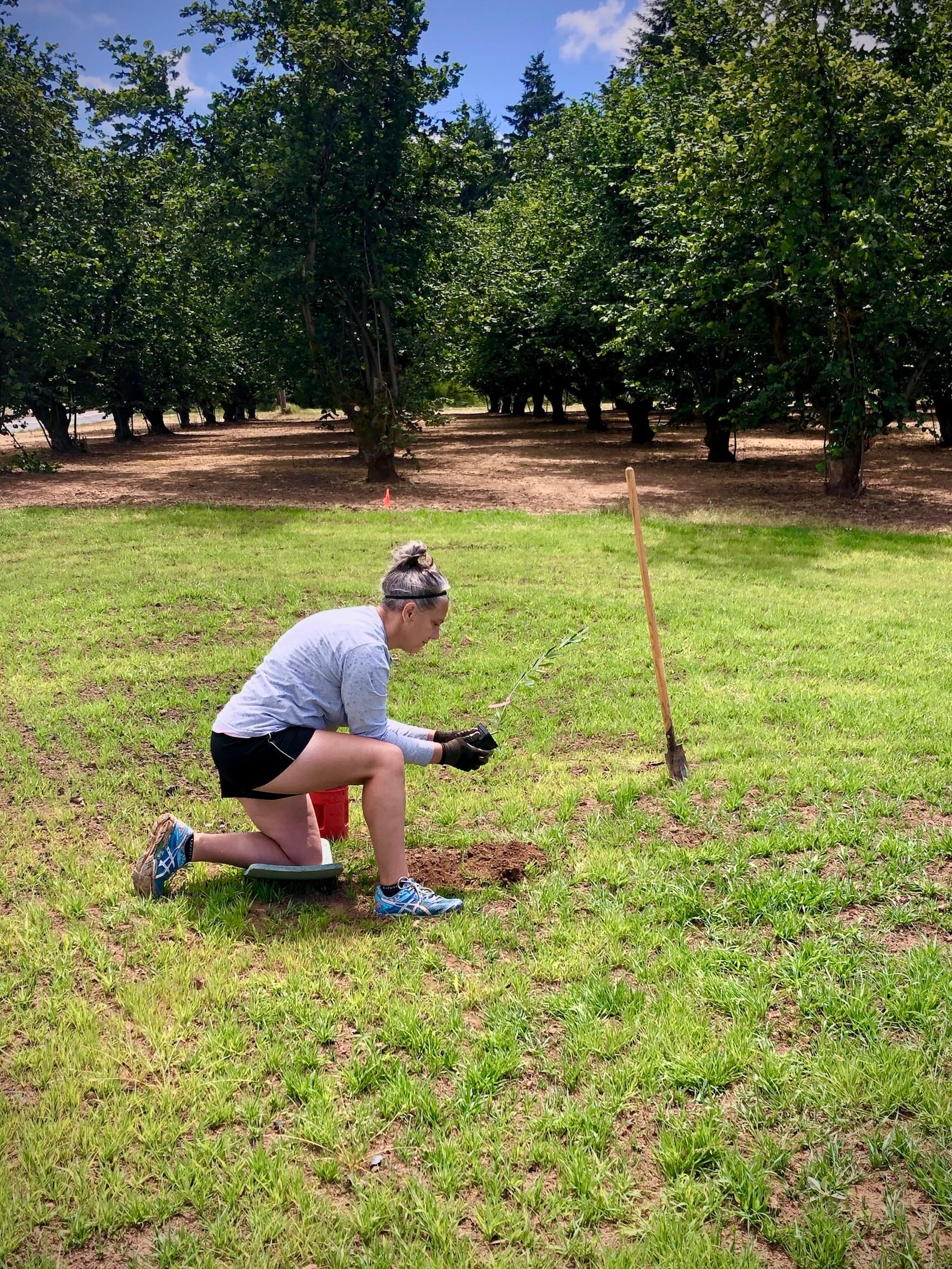
“We started this just about 10 years ago,” Wendland said. “We wanted to try something new, so we ended up taking out about five acres of hazelnuts and started planting olives.”
Wendland noted the first 100 survived.
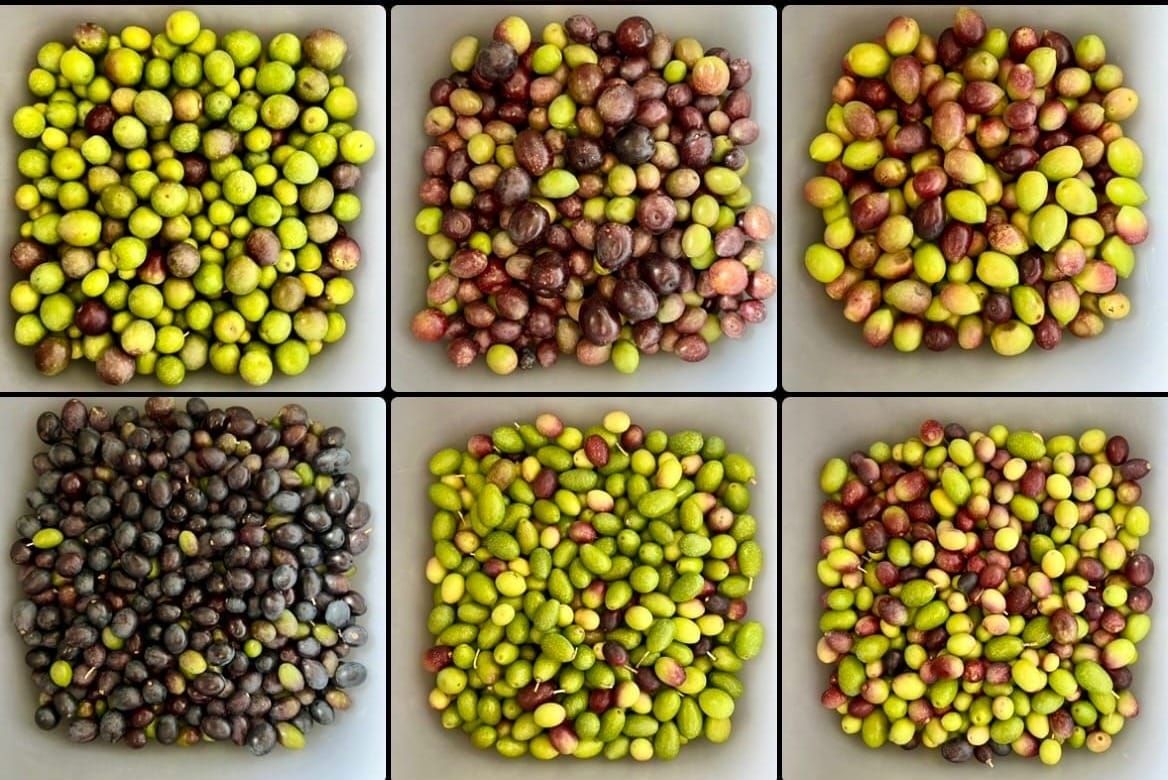
“We put in 100 more, and a hundred more and a hundred more, we just kind of kept on going,” she said. “We didn’t know what would grow here, so each time I would try a different set of cultivars (different varieties) of trees.”
At Coyote Hill, olive trees come from Italy, France, Spain, Egypt, Greece and other locations.
“We still have 27 varieties growing here that have survived and done well enough to keep going,” according to Wendland. “We have hundreds of trees now.”
Wendland calls her olive efforts a “grand experiment.”
“In Oregon, microclimates are going to be kind of the big controlling factor because all it takes is a difference in a few hundred feet of altitude how cold you might get over a winter,” she said. “I tell people we’re farming on the edge. So far, we’re kind of eking it by.”
When you think olive production, Oregon may not come to mind.
“Traditionally, they (olives) are very Mediterranean,” Wendland said. “Spain is the biggest producer in the world. Italy is known for their olive oil, and, of course, Greece. There are smaller areas that are starting to increase production, Tunisia, Croatia, places like this that are a little outside the normal growing regions.”
Wendland said of Oregon, “We have a pretty narrow band of where olives will tolerate because they can’t get too cold. There is a saying that ‘there are only two ways to kill an olive tree, to burn it or to drown it,’ but freezing it should be added to that saying.”
According to Wendland, there are a limited number of olive-growing locations in the U.S.
“Most of the groves in the U.S. are in California,” she said. “There is one in Arizona. There are a few in Texas — there are a couple in Florida and a couple in Georgia. There are actually some in Hawaii — we’re experimenting here on our side of the world.”
Wendland was asked about the future potential for olive growing in Oregon and the Northwest.
“We’re kind of facing a few issues here that aren’t being dealt with in other places,” according to Wendland. “The one that’s very obvious is we bloom later here, which means our growing season is much shorter. We don’t get the option, really, of waiting for the olive fruit to mature and ripen properly to pick it. We basically are watching the weather and then picking frantically before it freezes.”
She added that decisions are dictated much more by our freeze time than ripening time.
“Right now, we are relegated to completely hand-harvesting olives in Oregon,” she said, adding that there is a lot of potential. “The scalability of it is what is going to prove a challenge.”
Wendland said she has been coordinating with Neil Bell of Oregon State Extension Service.
“We’re doing our own trial unit here because it’s just how we started. We didn’t know what would grow here — we shared a lot of data back and forth,” she said.
Wendland added that olive oil produced at Coyote Hill won bronze at the 2026 Los Angeles International Olive Oil Competition.
“That’s a tough competition, so we were really pleased,” she said.