


A much-loved horse inspires Sherwood resident to start Rio’s Refuge
The horse rescue takes horses in, rehabs them, and adopts them out to people who want to give them lifelong homes

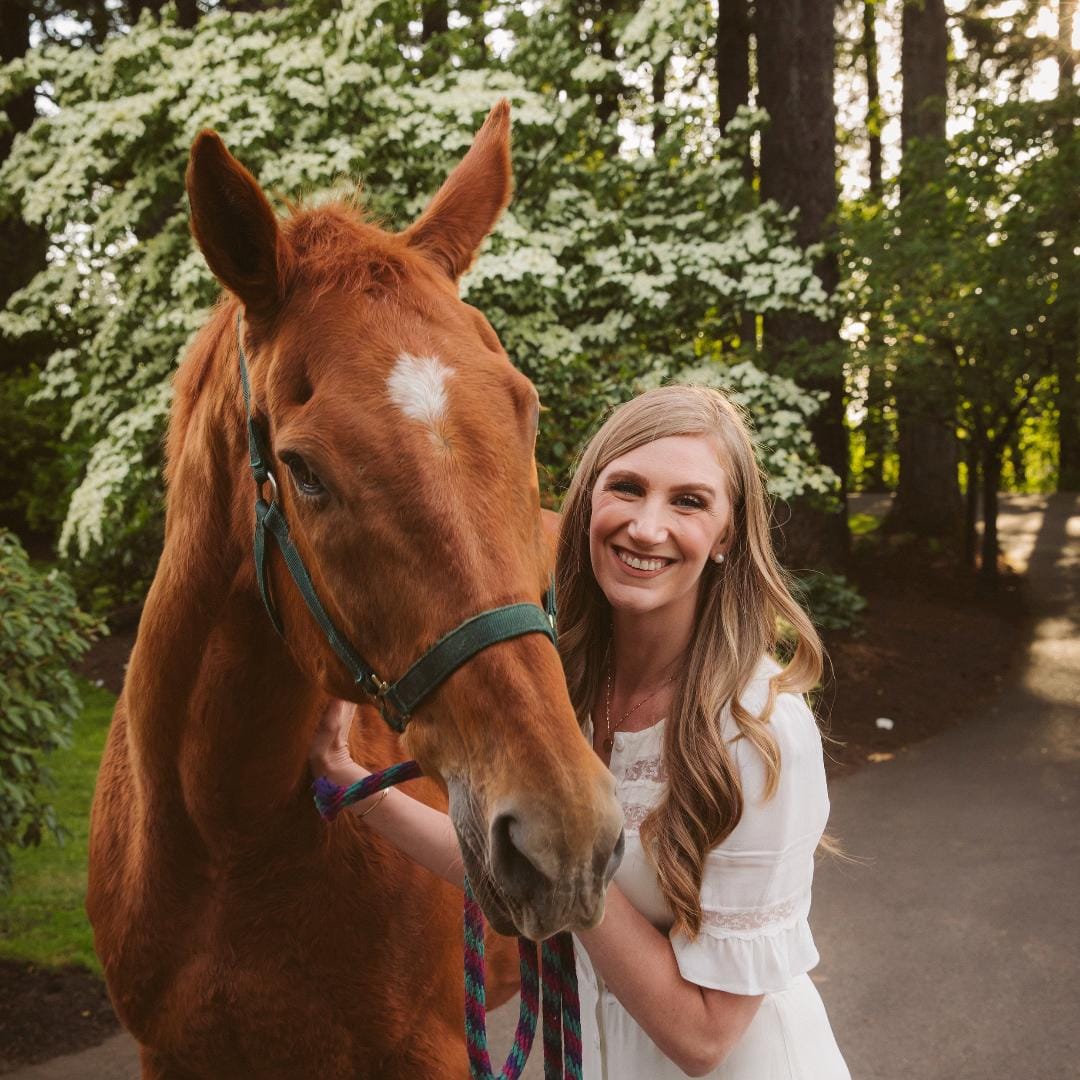
SHERWOOD, Ore. — A potentially intimidating ex-racehorse named Rio inspired Sherwood resident Kirby Striplin to launch a nonprofit in May 2025 called Rio’s Refuge, with the intent to save horses from abuse, neglect, abandonment, and slaughter.
Striplin owned her beloved Rio for 12 years before having to euthanize the horse due to a fatal condition in which a tumor wraps around and kills off the intestine.
“It took me probably a good four years to get him to trust me,” she said, noting that Rio was a Portland Meadows race horse. “He had had 13 owners that we knew of by the time I had got him at 13 years old. He was very misunderstood, a very anxious horse. He tried to buck me off when I first tried riding him because he knew he was about to be passed to the next person and was trying everything to avoid it.”
Striplin, who grew up in Yamhill County and has lived in Sherwood since the fall of 2022, said she has always had a love for horses.
“I’m a life-long horse lover,” she said. “I have been around horses since I was three. I have owned horses since I was 11. I’m a huge animal lover, but horses are especially emotionally intelligent, so they’ve always been a very therapeutic way to help navigate life, from childhood to adulthood.”
Describing the origins of her 501(c)(3) nonprofit, Striplin, who currently owns two horses along with three rescue horses, said, “I came across a social media account, another rescue that was rescuing horses from the slaughter truck down in Texas. There is a lot of controversy around all of that.”
According to the American Society for the Prevention of Cruelty to Animals, “The last three U.S. slaughterhouses — two in Texas and one in Illinois, all foreign-owned — were shuttered in 2007. In 2006, these facilities killed more than 104,000 horses for human consumption, shipping the meat overseas.”
The ASPCA website states, “In the year 2024, approximately 20,000 American horses were trucked over our borders to be slaughtered for human consumption. Horses bound for slaughter (including pregnant mares, foals six months and older, and horses who are injured or blind) are commonly and legally shipped, enduring more than 24 hours at a time in crowded trucks without food, water, or rest.”
Reaching out to the community and mentioning that donations can be made to her website, www.riosrefuge.org, Striplin said that if you come across a horse that has experienced abuse, neglect, or abandonment, it’s important to contact the authorities so they can go through the proper channels and processes to properly remove the horse from the situation.
“Once the horse is cleared to be removed and rescued, we would step in and facilitate the full evaluation of the horse’s condition,” she said. “You partner with a vet and have the whole evaluation done.” Rio’s Refuge can help authorities with the removal process – handling the horses, transporting, and providing shelter.
“The end goal is to take these horses in, rehab them and adopt them out to people who want to give them lifelong homes,” she said. “In the near future, I will launch a program that’s owner to owner. Horses are very expensive and time-consuming and aren’t easy to house. But if someone needs to offload their horses, they can use me as somebody in the middle who can vet a new owner.”
Speaking of her nonprofit, Striplin said, “People are very responsive to wanting to volunteer and wanting to donate certain items,” she said. “A lot of the barns in the area have given me buckets and other supplies to use. Community response has been really supportive and really great so far. When you’re new, you have to go tell everybody you’re here.”
If a family is considering adopting a horse, Striplin said it's a huge commitment and a lot of responsibility.
“My advice is that if you are new into the horse world, I would definitely utilize getting a trainer, really look into what types of things you want to do with the horse,” she said. “I would honestly say the best thing to do is to spend a lot of time at a barn and learn from the people who ride and take care of them, because there is a lot of maintenance and upkeep that goes into having a horse of your own.”
Striplin added, “Horses get a bad rap for not being very smart, but I would like to challenge anyone that doesn’t think a horse is smart. We don’t give animals enough credit.”
In addition to the website, you can get in touch with Rio’s Refuge at Instagram, Facebook, and TikTok.