


Alpacas of Oregon celebrates annual shearing day
Local working farm hosts open barn event
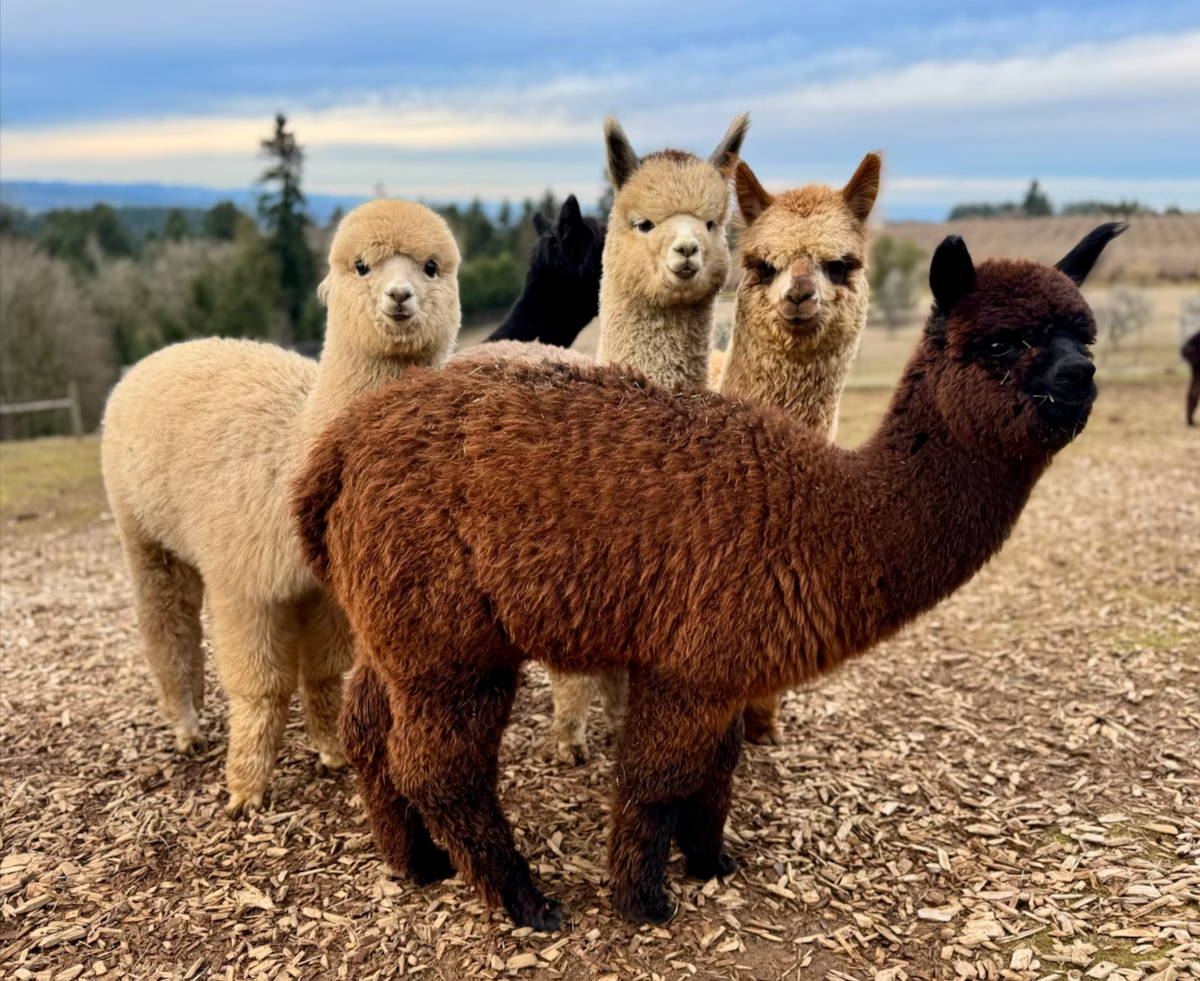
SHERWOOD, Ore. — Locals harvest soft alpaca fibers, some of the most luxurious material in the world, right here in Sherwood.
Alpacas of Oregon celebrated its annual Shearing Day with an open barn event on Sunday, May 24.
The family-owned working alpaca farm has been operating for 23 years by owners Suzanne and Doug Campbell. Doug said alpacas originate from the Andes, living at an elevation of 14,000 feet — 2,000 feet higher than the top of Mount Hood.
“In the fiber world, alpaca is the good whiskey at the top shelf you pay extra for, if you’re a knitter or a spinner, or anybody who works with fiber,” Doug said. “The animals are super cute, but in order to keep them healthy, you have to shear them.”
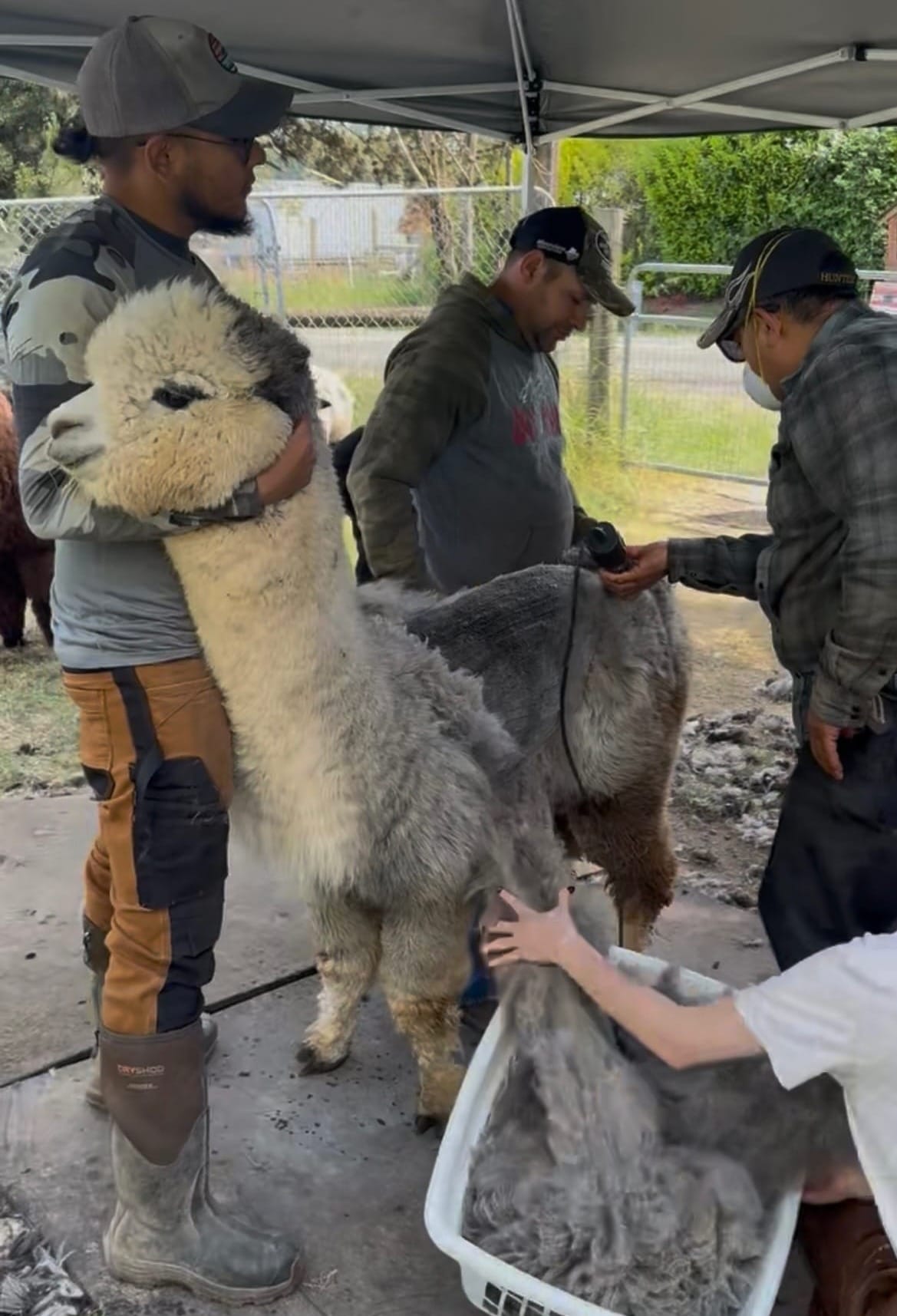
Shearing two to five pounds of fiber off each 150-pound alpaca protects the animals from heat stroke and heat stress in the summer. It takes two people to hold each animal, and one more to shear them. Per alpaca, shearing takes about eight minutes.
“That’s an all-hands-on-deck day. We usually start at about 9 a.m. and go until we’re done — that’s going to be probably an eight-hour day,” Doug said. “We take every animal and basically give it a haircut so they look like wet cats.”
Doug said alpacas have three responses to being sheared: stoic, passive aggressive, or Linda Blair from The Exorcist.
“It’s not fun for the animal, but when it’s over and they’re seven pounds lighter, they’re jumping around the patch … they’re very happy,” Doug said.
After the fiber is removed from the alpaca, Suzanne’s Aurora Colony Handspinners Guild volunteers to pick out all the debris like pine cones. It’s labor intensive, but with the motivated volunteers, it only takes 10 minutes per animal. Then, the fiber is run through the farm’s fiber mill, split into yarn, and sold at the farm store, all on the property.
Suzanne, a handspinner, loves to work with alpaca fiber, and also brings her knowledge of fiber quality, bloodlines, and breeding pairings. Doug runs the day-to-day operations of care and maintenance, hosts farm tours, and shows alpacas, winning blue ribbons for fleece and conformation.
“In nature, there are only three things softer than alpaca: silk, which is not very warm, cashmere … and wild vicuna,” Doug said, noting that multiple yearly shearings of a cashmere goat only produces one or two pounds of fiber, and that wild vicunas are only shorn every three to four years — if you can find one.
Alpacas, a history
When the couple first started dating 31 years ago and Doug first saw Suzanne’s herd of about a dozen alpacas, he was tallying up how much they could sell them for — on average, about $15,000-20,000 each. Raised in Lake Oswego, his life plan was a quarter-acre house on a cul-de-sac.
“I wasn’t open to farming at all. Her counter to that was to get me naming them,” Doug said. “It took me eight years from when we met, when our second kid was born, I finally said okay, we can try living in the country. I fully expected that to be an experiment that was over in four or five years, and we’ve been here for 23. Then once we got here, I went, why did I fight it so hard? This is easy.”
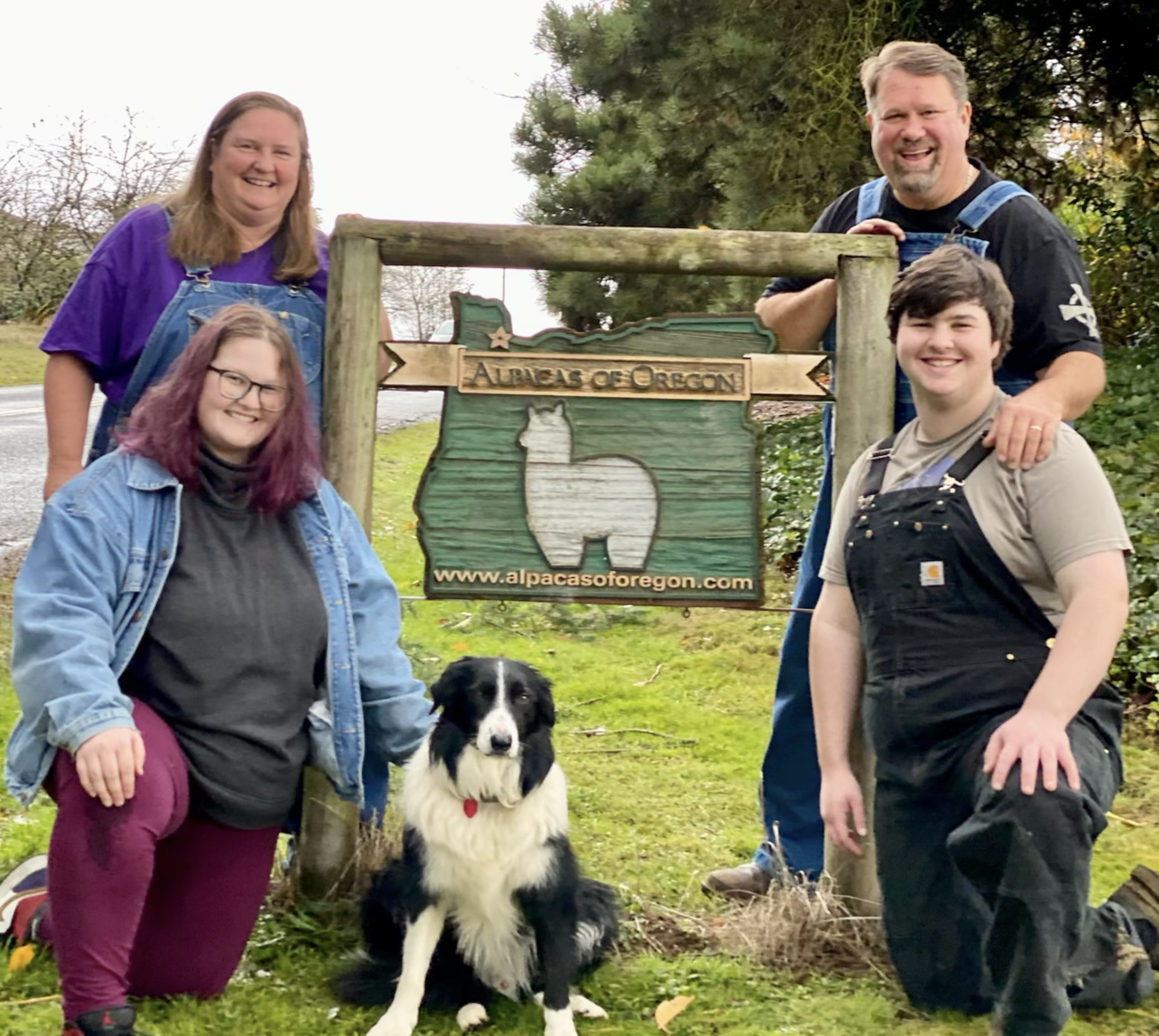
Aside from the hard work of shearing day, Doug said maintaining the alpaca’s care, feeding, and cleaning the barn takes less than an hour per day. Finally on board, Doug started figuring out how to market the alpacas by showing them at competitions, so other farms would want to breed the males and buy the offspring.
“Being the guy who likes sports and a sales guy who likes competition, I took that over,” Doug said. “If you don’t have good fiber, you never win the show ring.”
The farm specializes in high-quality huacaya alpacas in black, grey, mahogany, brown, fawn, and white colors. All the animals receive personal hands-on care on a daily basis. As breeders, the farm can be its own vet — giving shots, cutting toenails, trimming teeth.
The farm is home to around 50 animals year-round, with new babies in spring and summer. Right now, they have 45 alpacas with eight babies on the way. They usually sell about 10 animals per year, Doug said. His favorite part about running the farm is the babies.
While shearing day is free for visitors, guests can book visits online for $20 per person, with kids five and under half price, from Wednesdays through Sundays. The farm hosts elementary classes, senior center visits, school fairs, barbecues, birthdays, and weddings. Doug hosts the tours, teaching all about the history and facts about the animals while visitors can interact, feed, and pet them.
Finished products like socks, hats, and scarves are sold at the farm store, along with fiber for those who like to needle, felt, and spin.
“Alpaca is so much softer than wool, there’s no comparison,” Doug said. “They’re actually considered hypoallergenic.”
Learn more by visiting www.alpacasoforegon.com, 21345 S.W. Aebischer Rd., or by calling 503-348-6958.