


Sherwood's Home Rule: What changed after Salem stepped in
Sherwood voters approved Home Rule protections. Salem responded with legislation. Six months later, what actually changed?
SHERWOOD, Ore. — When Sherwood voters overwhelmingly approved a pair of Home Rule charter amendments in January, city leaders hoped they would strengthen the city's ability to preserve public involvement in land use decisions. The amendments were designed to preserve Sherwood's authority over public notice and citizen involvement in local land use decisions.
Home Rule is the authority granted to Oregon cities under the state constitution to govern local affairs. Sherwood officials argued the charter amendments would strengthen the city's legal standing if state law conflicts with voter-approved local requirements for public notification and hearings.
In March during Oregon’s 2026 Legislative short session, the Oregon Legislature passed new laws limiting how cities can notify residents about certain development proposals, setting up an ongoing debate over where state authority ends and local control begins.
Although no housing projects have yet tested Sherwood's voter-approved amendments, city officials say the measures remain an important safeguard should the issue eventually end up in court.
Sherwood Mayor Tim Rosener emphasized that Sherwood is not opposed to housing developments, but wants to ensure residents remain informed and involved as Sherwood grows.
"We're not anti-growth, and we're not anti-housing," he said. "We need more housing choices. We need entry-level homes, middle housing and homes where people can age in place. We just want growth that's compatible with our community."
For Rosener, the issue is about preserving the city's character for future generations.
"My family moved here in 1977, and I've watched Sherwood grow from a very small town into the community it is today," he said. "The decisions we make today are going to have long-term impacts. If I come back in 30 years and Sherwood still has that same feel and is still a wonderful community, then I'll know we did it right."
He pointed to Sherwood West, the city's long-range expansion plan, as an example of extensive public involvement that has helped build community support.
"We made commitments to residents through the Sherwood West planning process," Rosener said. "A lot of what we're trying to do is protect our ability to live up to those commitments."
What changed in Salem?
Rosener said the new law does not invalidate Sherwood's charter amendments, but could eventually lead to a legal challenge over where state authority ends and local authority begins.
"The reason we did this was to protect our rights of home rule," Rosener said. "Our charter now clearly says we're going to notify residents. If that ever ends up in court, we have a stronger case because our voters put those protections into the city's charter."
Under the new state law, notification for certain land use decisions is generally limited to property owners within 100 feet of a proposed development. Rosener said that means renters in apartment buildings, for example, may not receive direct notice because only the property owner is notified.
"We're not changing our ordinances," Rosener said. "If a developer wants to challenge us, they can, but our belief is they're unlikely to because it would only delay their project."
Rosener said he believes the Legislature has shifted from setting minimum standards for cities to setting maximum limits on what cities can require.
"In the past, the state would say you have to notify people within 100 feet, but cities could choose to go beyond that," he said. "Now they're saying you can't notify anyone beyond that. That's a fundamental change."
While state lawmakers have argued that streamlining regulations will help address Oregon's housing shortage, Rosener said the biggest barriers to construction are infrastructure costs, financing and high interest rates — not local public notice requirements.
"If you look at the bills they've passed since 2019, we haven't seen housing production increase above historical rates," Rosener said. "To really move the needle, you need infrastructure, lower land costs, and investment."
What changed in Sherwood?
So far, the legal debate has not translated into changes on the ground.
Since January, the City has not received any land use or annexation applications that have been affected by the charter amendments, according to Eric Rutledge, City of Sherwood community development director.
“Since we haven’t received any applications that are subject to the amendments, we haven’t seen a change in the development review process,” Rutledge said.
He also noted that most land use applications in Oregon are subject to the 120-day rule requiring local governments to make a final decision within 120 days of the application being deemed complete.
“The City’s charter amendments reinforcing public notice and hearing requirements do not change this rule,” Rutledge said. “The average time it takes to make a final decision on land use applications with a public hearing in Sherwood is 90 days from when the application is deemed complete.”
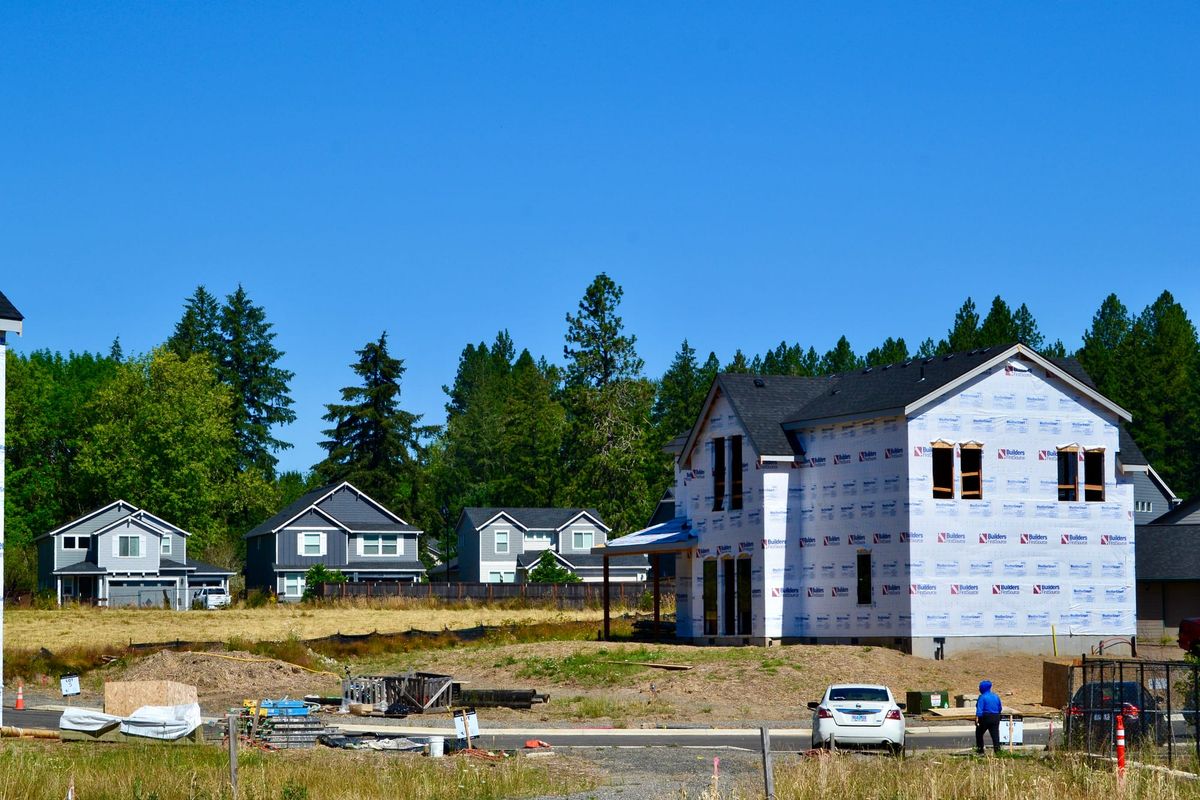
So far, Rosener said he has not seen the charter amendments slow development or discourage builders from working in Sherwood, either. Housing construction continues in areas such as Brookman, and he said conversations with homebuilders and industry groups have generally been positive after city officials explained the purpose of the amendments.
The city also has not received any indication from state officials that Sherwood is out of compliance with housing planning requirements. Rosener said several other Oregon cities have contacted Sherwood to learn more about the charter amendments, too.
Looking ahead, he expects debates over local control to continue as he prepares to become president of the League of Oregon Cities next year.
"Every year we gear up for another fight over preemption and local control," Rosener said. "We're going to continue doing everything we can to make sure our community has a voice in how Sherwood grows."

What’s next?
Sen. Courtney Neron Misslin (D-Ore.) consistently votes in support of public engagement for land use because she wants her votes to be representative of the communities she serves, and listens to local leadership.
“I serve a district where land prospecting and developer interests could threaten precious natural and agricultural lands,” Neron Misslin said. “We must ensure that as our communities grow and develop, they do so through a strong public process that gives residents confidence the outcome is in the community's best interest.”
She said she heard concerns that SB 974 removed important elements of the public process, prohibiting public hearings, reducing transparency regarding changes in neighborhoods, and increasing power for developers.
“Sherwood residents want local accountability, and reassurance that safety and community feedback will be properly considered,” Neron Misslin said. “I was disappointed that the solutions offered this session did not address all the concerns of our Oregon cities. My votes stand as a marker that not all policy is polished and perfect, even if it is addressing major concerns.”
According to Neron Misslin, Salem may continue to have conversations about the balance of local and state control in the face of a housing crisis with the shared goal of delivering enough safe, livable, and affordable housing for Oregonians.
“Local versus State control is an ongoing conversation that touches many sectors,” Neron Misslin said. “ I will continue to highlight sound local decision making that is delivering on Oregon’s housing and affordability priorities. Sherwood shouldn't be penalized when other communities take a different or less urgent approach to meeting Oregon's housing and planning goals.”
She said she understands that the communities she represents want to partner with the state in productive ways.
“I trust that Sherwood, Tigard, King City, and Wilsonville will continue to respond to the housing crisis, strengthen our economy, and ensure our communities are safe places to live, work, and learn,” Neron Misslin said. “My opposition to part of a bill doesn’t indicate opposition to the entire bill or the goals of a policy. When it comes to delivering on Oregon’s top priorities, the cities I serve are asking for partnership and flexibility for jurisdictions that are already meeting goals, rather than preemptions that may limit local tools without making meaningful improvements.”
Regardless of how the legal questions are ultimately resolved, Rosener said his focus remains on ensuring Sherwood grows thoughtfully for future generations.
"The decisions we make today are going to have long-term impacts on our community,” Rosener said. “If I come back in 30 years and Sherwood still has that feel and it's still a wonderful community, then mission accomplished."