



PGE to build near Tualatin River National Wildlife Refuge amid concerns
New battery storage infrastructure is intended to help reduce carbon footprint
By Diana Page Jordan
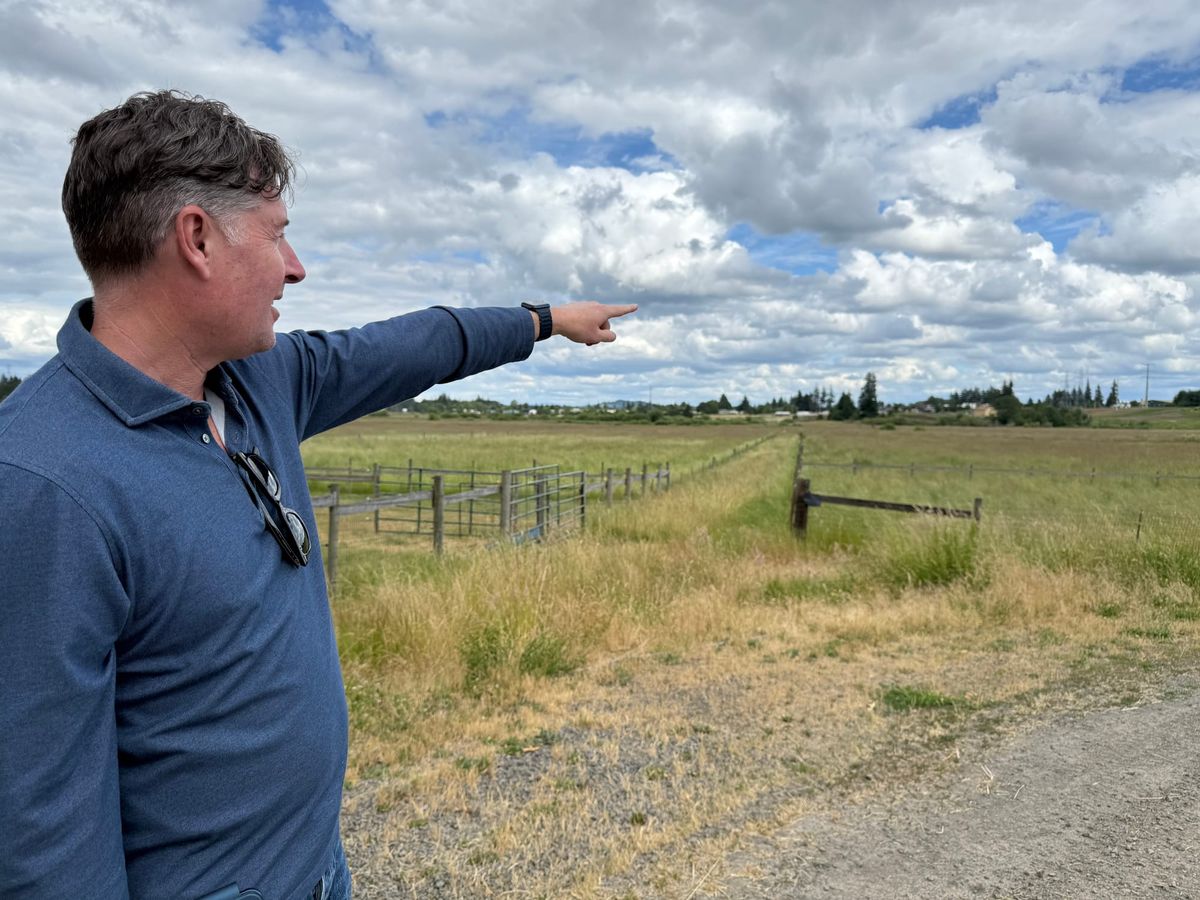
SHERWOOD, Ore. — It’s only fourteen years until Oregon’s regulated electric utilities are – by law – at 100% clean energy. Portland General Electric’s Communication Manager Drew Hanson says they are taking new strides right now toward reducing their carbon footprint.
"BrightNight has proposed to build a battery storage facility that is near an existing substation of ours," Hanson said.
That means building near the Tualatin River National Wildlife Refuge, a project raising questions and concerns. At the same time, Hanson points to the advantages of this project.
"Battery storage is a great way to capture wind energy and solar energy, because as you know, wind and solar are variable resources, where the wind's not always blowing, the sun isn't always shining," Hanson said. "So, batteries allow us to be able to capture that energy."
Another plus for PGE customers is that the energy storage systems mean more reliability and fewer outages. Hanson said BrightNight is a third party that builds and manages its own battery storage facility.
"That reduces the cost that our customers would bear to build those systems," Hanson said. "BrightNight would financially be responsible for that, and then we would just buy the energy from them."
BrightNight’s Senior Vice President of External Affairs Scott Bolton said they held a community meeting on the site in mid-May.
“There's a section of property that we have here that we've been asked to see if we could develop bike paths," Bolton said. "That could be connected closer to the refuge. We’re looking into it.”
Toward the back of the property is wetland, which, Bolton said, they are not going to develop.
"Folks have asked us if we can put in bird blinds or pedestrian trails so that people can see the flyway (where birds fly) from the main refuge to where these units of the refuge exist," Bolton said.
A deeper concern comes from Bonnie Anderson, the executive director of the Tualatin River National Wildlife Refuge.
"It's not that we're opposed to the battery storage facility," Anderson said. "We're opposed to the power lines that they'll be putting up to do that."
Anderson is concerned that the result will be more bird strikes, as birds fly into the wires.
"We're here to protect the wildlife that utilizes this refuge, and we see this as a direct threat to that," Anderson said.
Anderson said – and Bolton agrees – that there is no way of knowing exactly how many birds are injured by the wires and die on the property or are devoured by coyotes.
"We're just asking BrightNight to do the right thing, not the easy thing, which would be to put up the power lines," Anderson siad. "The right thing is to bury them."
Bolton said undergrounding is impractical.
"The line would need to be buried in a known floodplain where saturated, unstable soils increase the risk of shifting, erosion, and long-term damage to the underground lines," Bolton said. "Higher groundwater levels and flooding can make it difficult to keep the lines dry and reliable. Flooding conditions also complicate construction, access, and repairs, often requiring extensive excavation in challenging conditions."
The four poles and three electric wires that would be built will have bird diverter equipment on those lines, Bolton said. He said the new power lines and poles will be smaller than the existing poles.
"We will make sure that birds can see that there are wires in the air and avoid those," Bolton said.
Bolton said BrightNight is motivated to not build more infrastructure than they need, to get as close to that substation as they can, to have as short a line as possible, and to protect the birds.
Meanwhile, the U.S. Fish and Wildlife Service is working with BrightNight to enter into a land exchange that would benefit the conservation goals of the refuge.
Megan Nagel works with the refuge and the Fish and Wildlife Service.
"The refuge would receive 11.4 acres of land with the potential for restoration to wetland habitat for one acre of gravel road approximately 19 feet wide," Nagel said.
That land is adjacent to the refuge, which means the refuge could increase contiguous habitat.
"This exchange brings a chance to restore wetlands that might not otherwise be available to the refuge," Nagel said. "Management goals in the refuge’s long-term management plan include continuing to expand opportunities for conservation by connecting the refuge to more habitat."
Bolton said the construction timeline is slated to break ground in the first quarter of next year. BrightNight is still working with landowners in the area near the Tualatin River National Wildlife Refuge.
"Towards the end of the second quarter of 2028 is when we expect to have it up and running," Bolton said.
And the bill? "I can't give the exact amount, but I would say it's north of half a billion dollars. It's several hundred million dollars of infrastructure," Bolton said.
"We also want to be a good steward of the environment and limit our impact," Bolton said. "I'm very excited about the ability to grow the refuge as a result of this project."